
Should I use a local engineer for my bridge project?
July 13, 2026
When people need a bridge, one of the first things they often do is call their local engineer. That makes sense. They're nearby, familiar with the area, and often very capable of designing a bridge.
However, bridge projects involve much more than engineering a compliant bridge. That's where specialist bridge expertise can make a real difference.
Looking beyond the bridge
Over the years, we've seen many bridge projects where the bridge has been designed correctly, but the overall solution has ended up costing significantly more than it needed to.
In many cases, the engineering isn't the problem. It's the decisions made during the wider design process. These decisions are often made as the project progresses in response to consenting and environmental constraints.
Small decisions can have big consequences
Seemingly small design decisions can have a significant impact on the overall project cost, including:
- Bridge length
- Abutment location
- Retaining requirements
- Avoidable specialist reporting
- Material selection
- Construction methodology
Take bridge length, for example.
At first glance, a shorter bridge might seem like the cheaper option. Less steel, less decking and less material generally sounds like a saving.
However, extending a bridge by a few metres can sometimes eliminate the need for retaining walls, reduce earthworks, simplify construction access, and avoid expensive investigations and specialist reporting associated with working within a waterway.
While the bridge itself may cost slightly more, the trade-offs can reduce the overall project cost significantly.
Looking at the bigger picture
The goal isn't simply to design a compliant bridge. It's to deliver the most practical, durable, and cost-effective solution for the site and the client.
Every bridge site is different, so each project should be approached on its own merits rather than applying a one-size-fits-all solution. It's also important not to commit to a particular bridge type too early, before the site's constraints, risks, and trade-offs are fully understood.
A recent project illustrates this well.
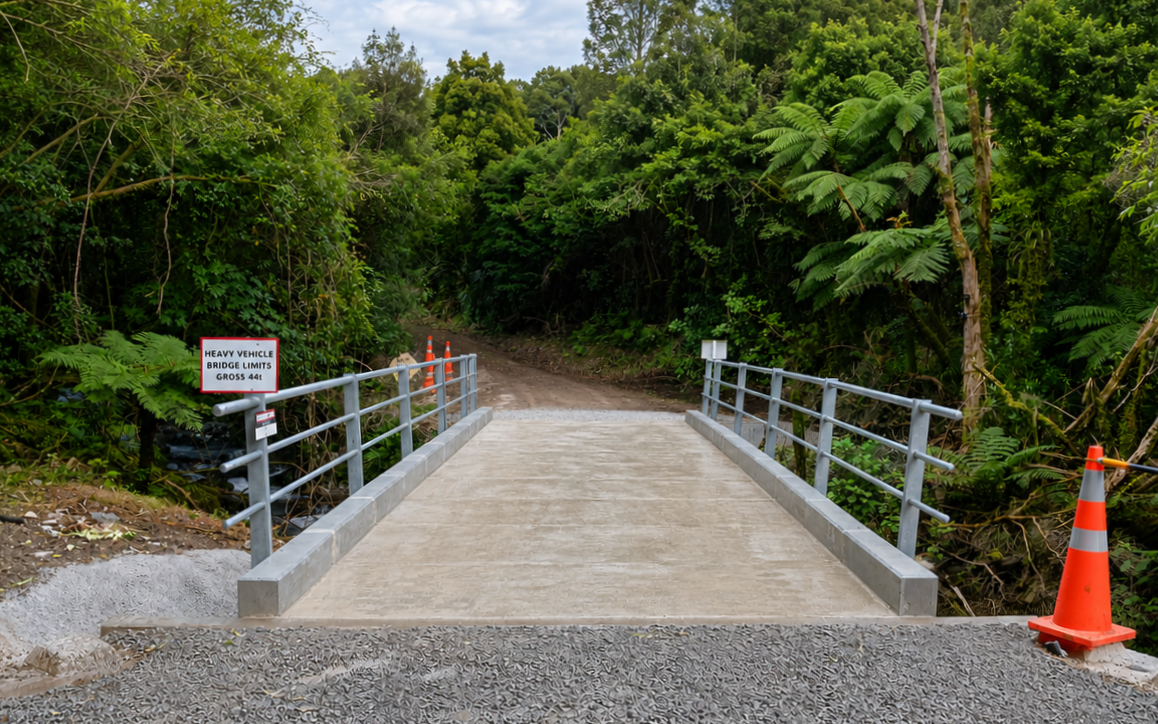
We were engaged to replace a damaged 8-metre bridge for a public infrastructure client. After reviewing the site, we recommended replacing it with a 12-metre bridge. Although the bridge was longer, it removed the need for foundations within the waterway.
The project instead proceeded through a traditional procurement process based on an 8-metre bridge. Over the following two years, numerous design and construction challenges emerged, resulting in approximately $300,000 being spent on design and the total project cost increasing to around $900,000.
Once the design was complete and ready for construction, we revisited our original recommendation.. By redesigning the project around the 12-metre steel beam concrete deck bridge we had initially proposed, the expected total project cost was reduced to approximately $300,000, including the redesign and construction.
Engaging an experienced bridge specialist early in the process can help identify opportunities, avoid unnecessary expenditure, reduce risk, and ensure the project is approached with the bigger picture in mind.
If you're planning a bridge project, get in touch with our team to discuss the best solution for your site.