When a storm destroyed a vital bridge, specialist thinking delivered a smarter solution that saved Wellington ratepayers more than $227,000 while reducing environmental impacts.
Location
Wellington
Client Name
Tiaki Wai
Date
July 31, 2025
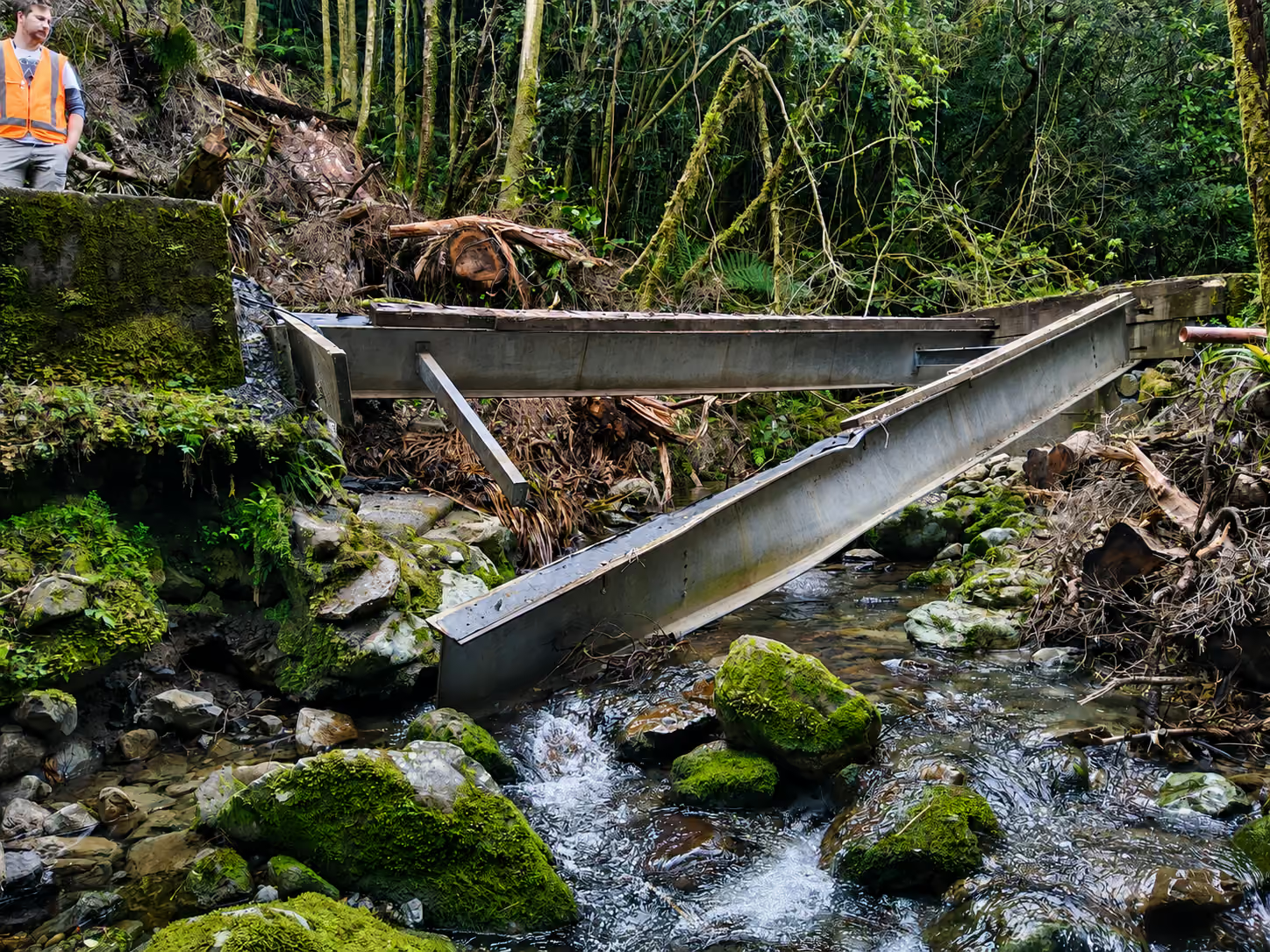
When a severe storm destroyed the bridge providing access to one of Wellington’s drinking water intakes near Wainuiomata in 2023, Tiaki Wai (formerly Wellington Water) faced an urgent challenge.
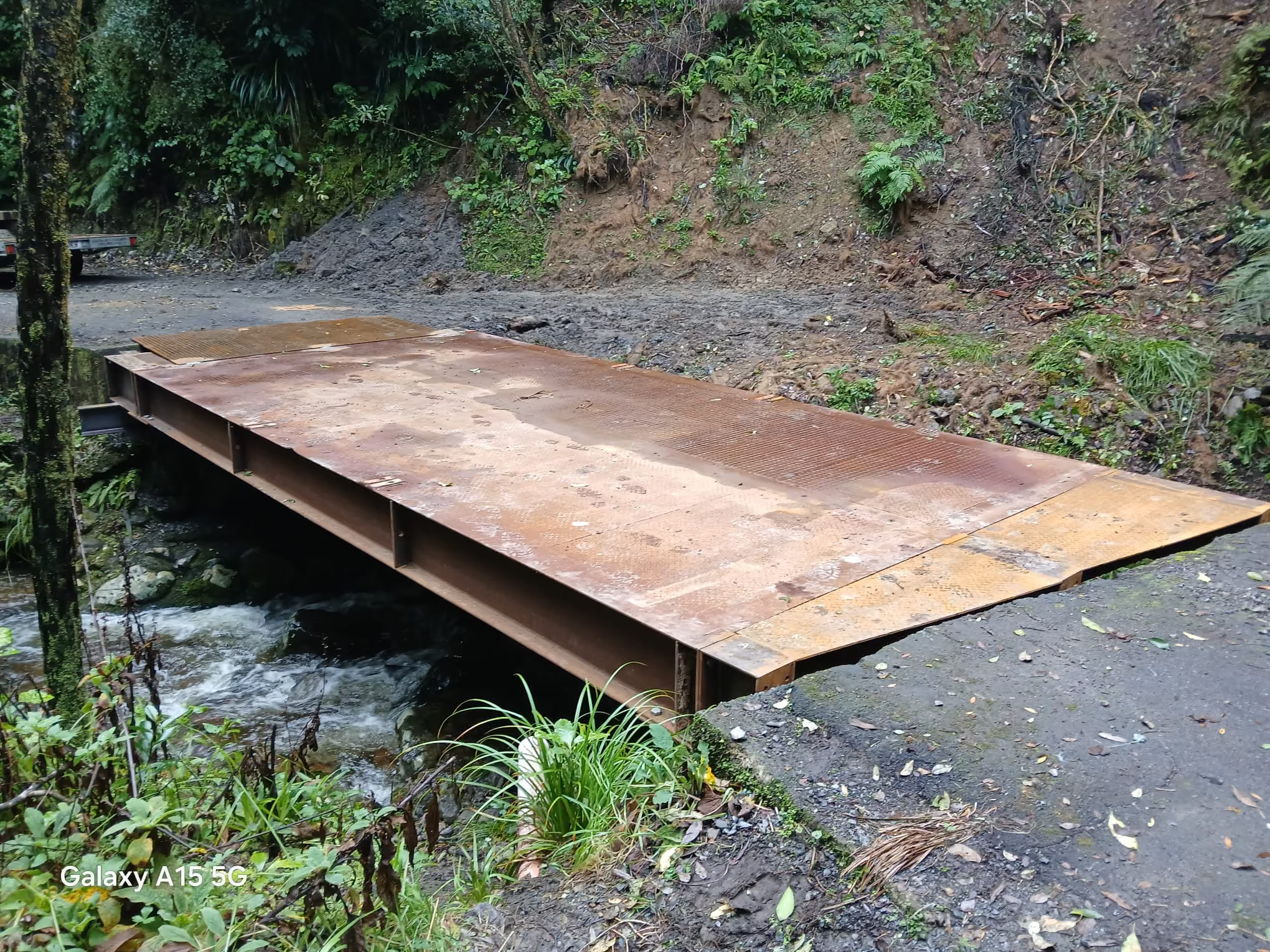
Every few days, operations staff were forced to walk several kilometres to clear debris blocking the intake, turning what had once been a routine maintenance job into a time-consuming exercise. Temporary access was put in place, but a permanent bridge was needed so vehicles could reliably reach this important part of Wellington’s water network.
For Jen Mathews, Tiaki Wai’s Project Director – Urgent Capital Works, solving the problem began with finding the right specialist.
“Having recently joined Wellington Water, I was focused on identifying opportunities to improve delivery outcomes and introduce innovative approaches where appropriate,” he explains. “I undertook market engagement and consulted with engineering advisors to identify specialist bridge contractors with relevant experience in New Zealand.
“That industry consultation and specialist advice provided confidence that Bridge It NZ had the relevant capability and experience to deliver the solution.”
Bridge It NZ travelled to site the next day to inspect the damaged bridge free of charge. The project followed Tiaki Wai's procurement and governance processes to ensure the appropriate specialist capability could be engaged. The project team explored an approach that enabled specialist expertise to be considered where appropriate.
The project team asked Bridge It NZ one more question: “If this design didn’t exist, how would you solve the problem?”
This question changed the entire project.
An alternative concept was subsequently developed by Bridge It that reduced construction complexity, though a replacement bridge had already been designed and consented by the existing consultant.
Bridge It NZ priced the construction of the consented design at $651,000 but suggested an alternative plan which would cost just $423,500 (including redesign costs), saving Wellington ratepayers $227,500.
“Their response really surprised me,” Jen says. “They proposed an alternative solution that provided significant value for money while meeting the operational requirements, including design and consenting.”
The original consented design was for another short-span bridge, requiring the existing abutments to be completely demolished and rebuilt. The stream would have needed to be dammed and diverted while new abutments were built, creating expensive in-stream work and major environmental disruption within a sensitive drinking water catchment.
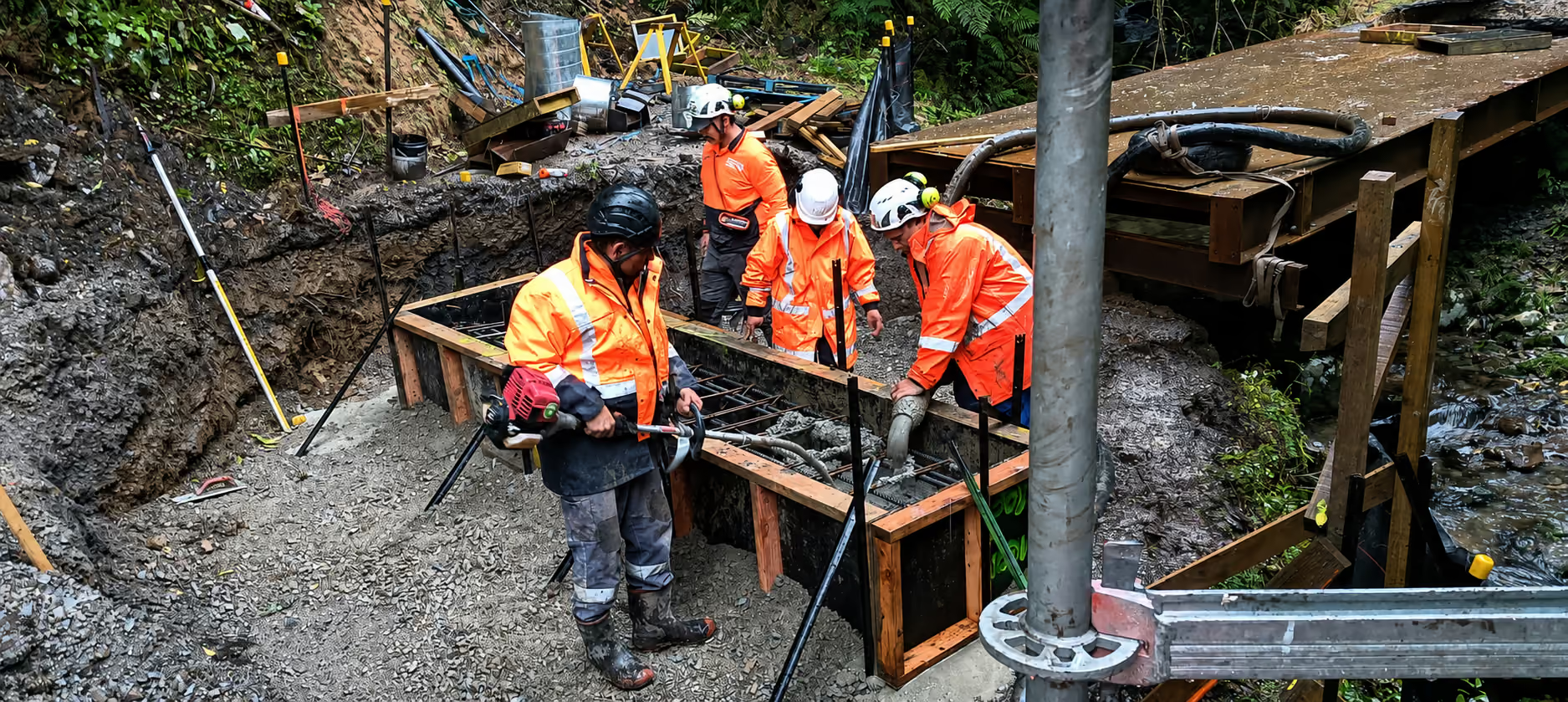
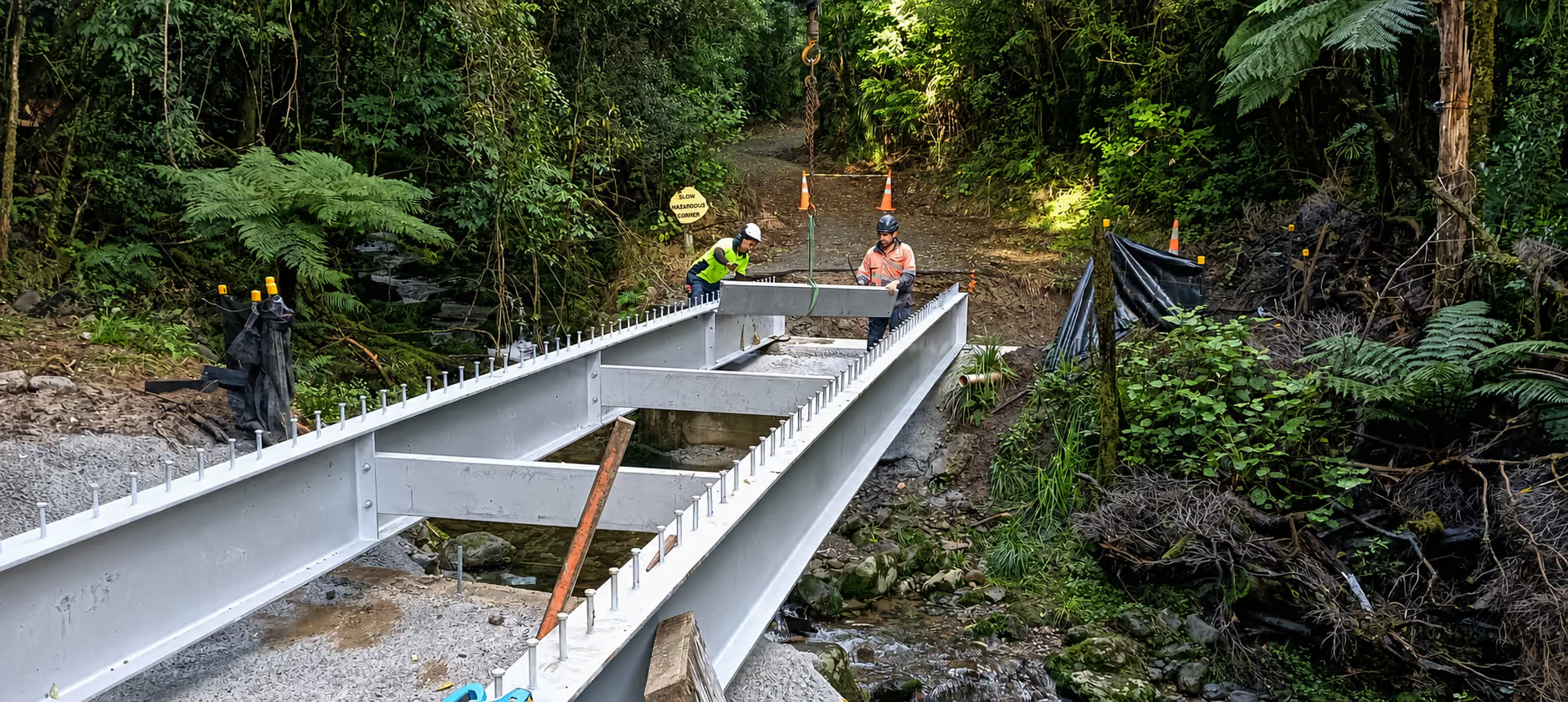
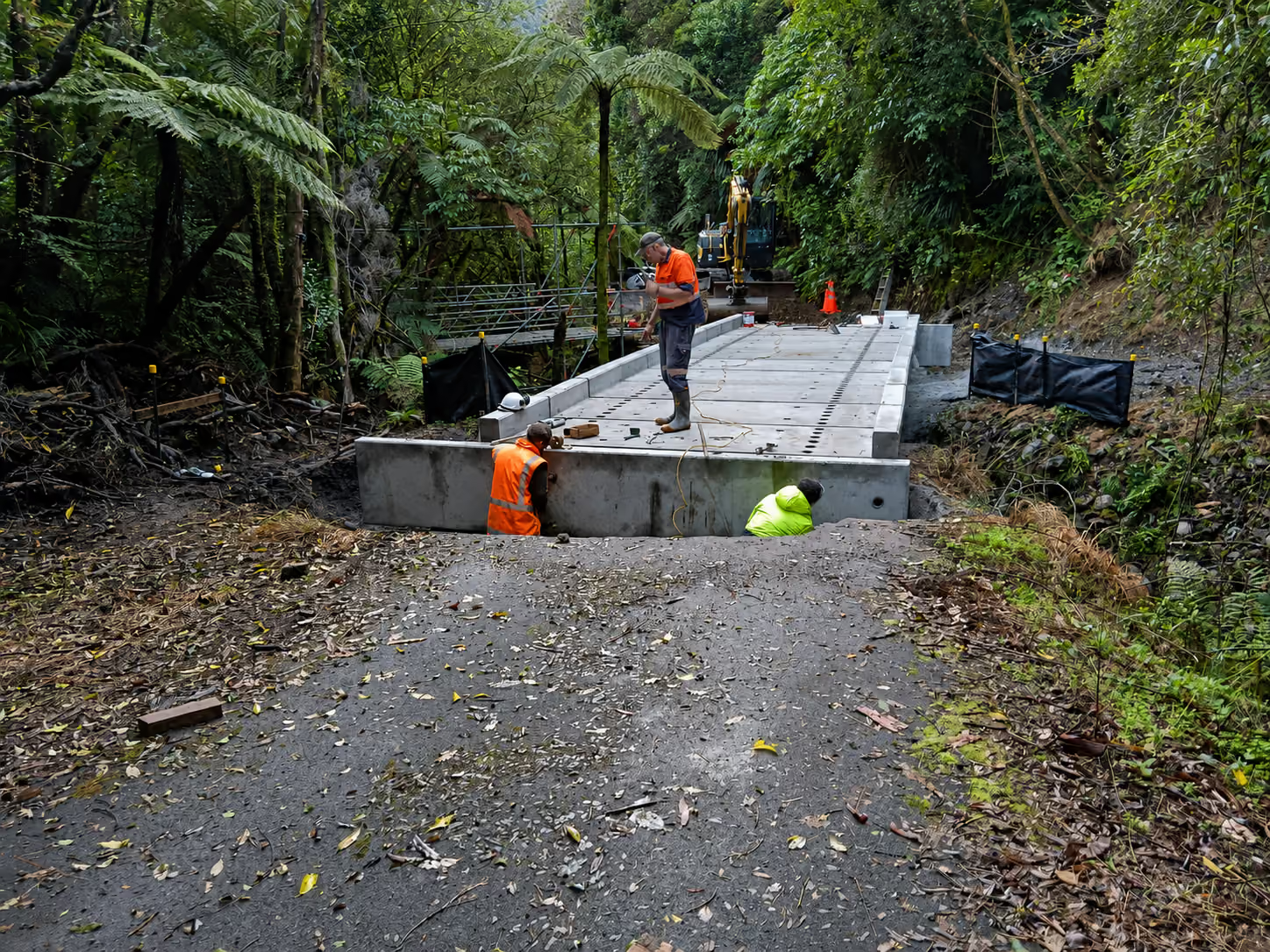
Bridge It NZ’s solution was to increase the span from just under 7m to 12m and build new abutments behind the existing ones. This allowed the old abutments to remain in place, holding the stream banks while water continued to flow naturally.
“I liked their out-of-the-box thinking,” Jen says. “Rather than replacing like for like– which would have required stream diversion, fish disturbance and ecologist involvement – they proposed a longer bridge that didn’t involve in-stream works and could be produced for a much lower cost.”
It was a straightforward demonstration of how Bridge It NZ approaches projects: understand the problem first, then design the right solution.
Given the operational importance of restoring access, the project had to be delivered within an accelerated 25-week timeframe. Bridge It NZ responded with a week-by-week programme covering design, fabrication and installation that would meet that deadline.
As much work as possible was completed at Bridge It NZ’s yard, with the steel beams and six concrete deck panels transported to Wainuiomata ready for efficient assembly. The permanent bridge was completed on site in four weeks, despite difficult winter conditions.
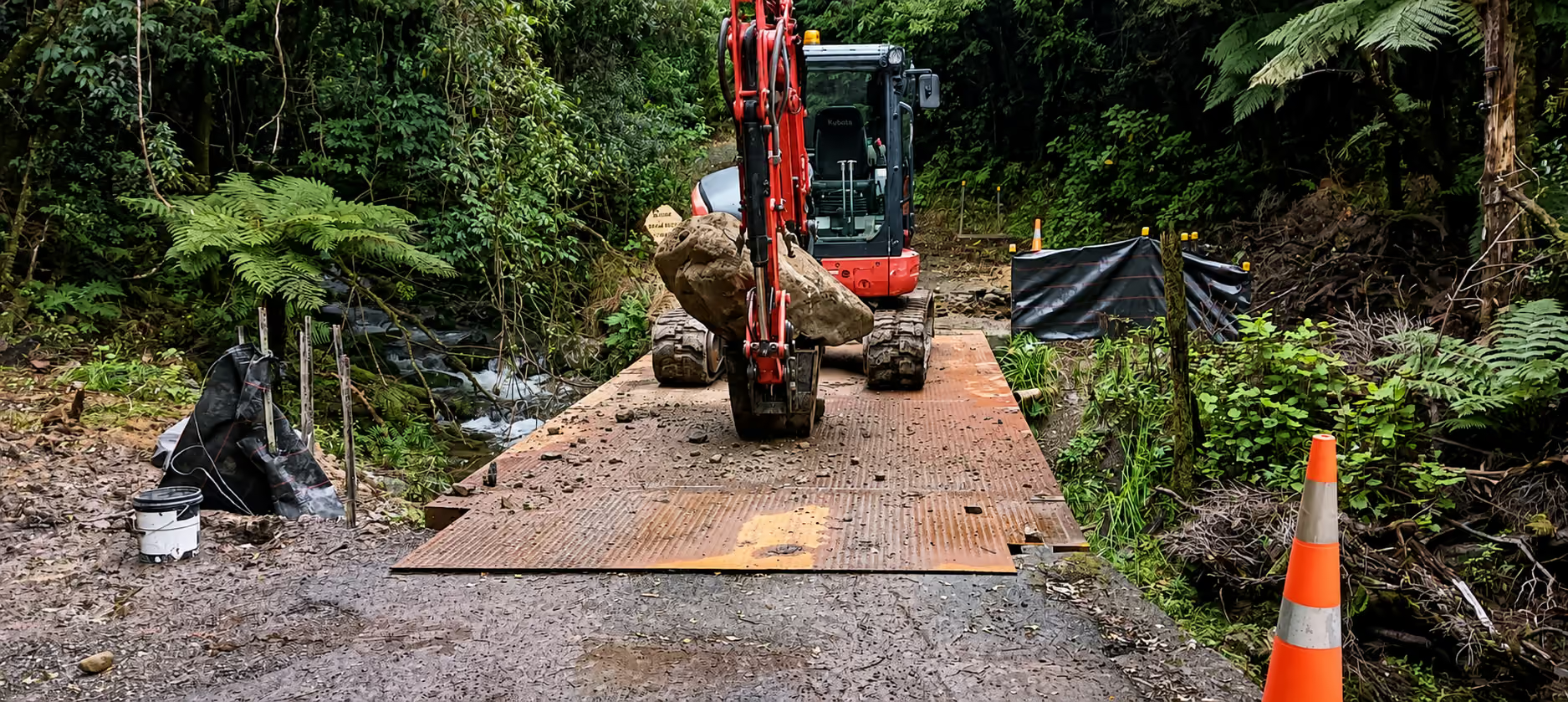
Bridge It NZ also found practical ways to maintain access for Tiaki Wai during construction. “They installed their own temporary bridge which our operation steam were allowed to use as well,” Jen says. “They were very proactive and also installed a temporary pedestrian bridge using scaffolding, even though it wasn’t part of the scope at all. That safe access for everyone was much appreciated.”
The project team was equally impressed by how much the site crew achieved. “It was a very small team on site and I was impressed with the capability, efficiency and commitment they demonstrated.”
This was Bridge It NZ’s first project for Tiaki Wai, so the company’s systems and performance were closely scrutinised. The project team visited the site regularly, and Tiaki Wai carried out safety audits and additional checks covering health and safety, quality, documentation, insurance and company policies. The project was completed without incident.
Weekly meetings kept everyone focused on progress, upcoming work and any decisions needed. When poor mobile coverage made communication from the remote site difficult, Bridge It NZ’s supervisor left the work area during breaks to send photographs and updates to the project team. The team worked weekends when necessary and adapted its programme around other activities planned within the surrounding reserve.
“Their motive was basically successful delivery of the project in an effective, timely manner,” Jen says. “Collaboration was excellent, and coming all the way from Tauranga and getting it done was something which we appreciated. From a performance point of view, I was very happy.”
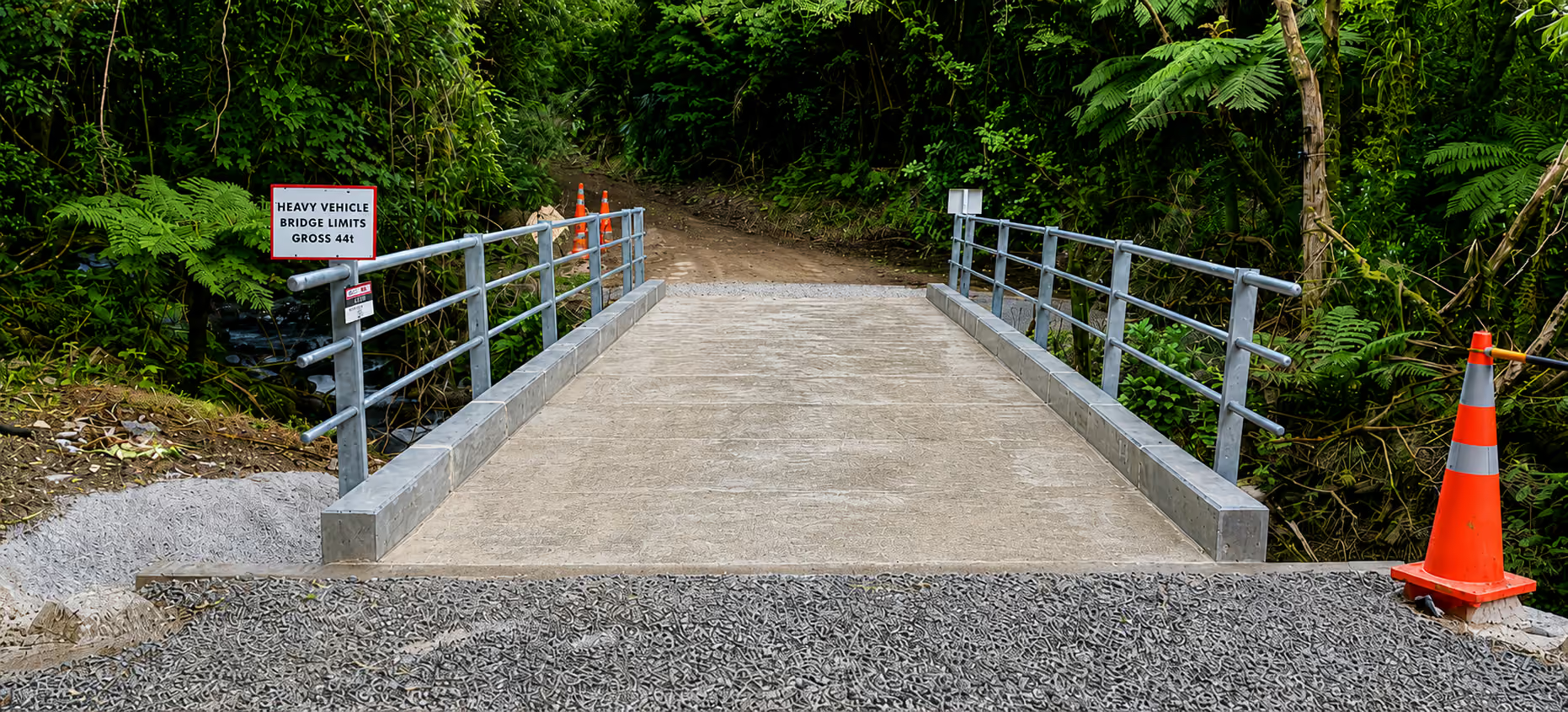
The finished bridge has restored reliable vehicle access to the George Creek intake and provides Tiaki Wai with a robust, lower maintenance asset designed to last at least 50 years. Just as importantly, the solution protected the stream, reduced operational and delivery risk, met a tight deadline and delivered substantially better value for Wellington’s ratepayers.